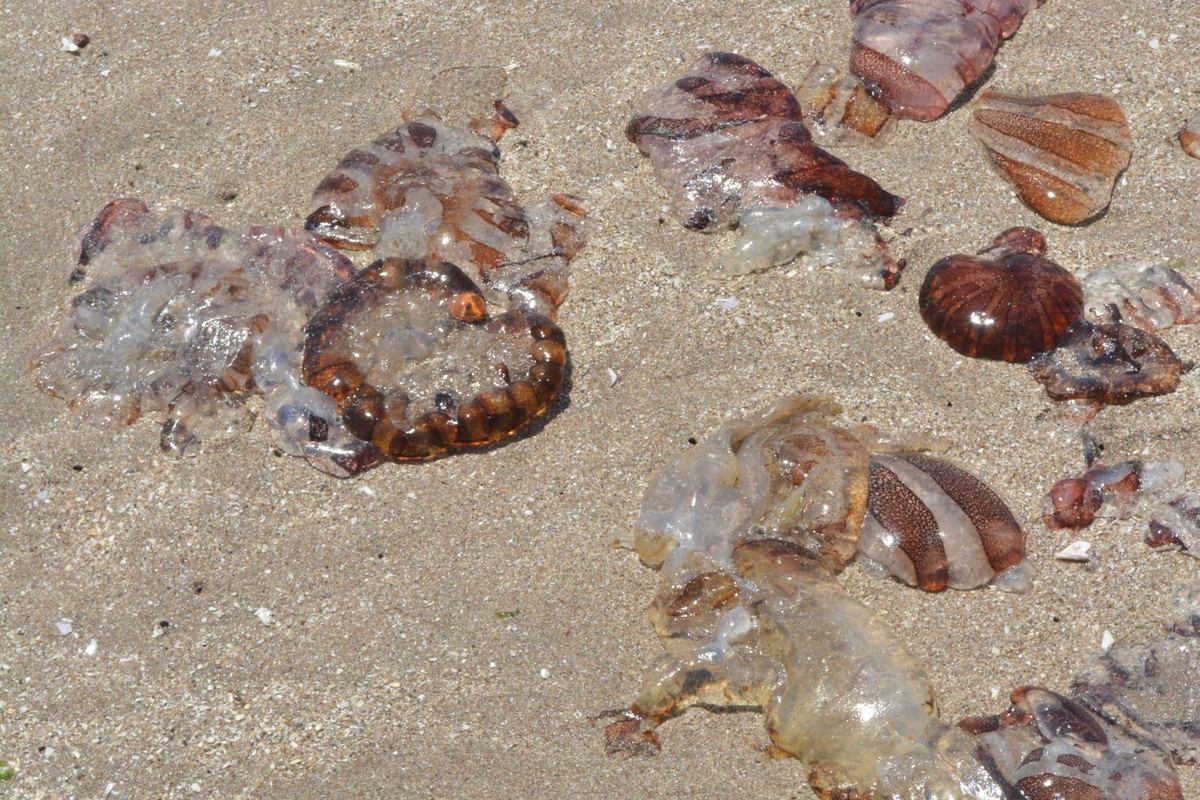
Jellyfish appear off Jávea in some summers, especially after easterly winds and storms. Check the flag on the lifeguard tower and the free MedusApp, rinse a sting with sea water (not fresh water), and see a lifeguard or pharmacy. Get medical help for a severe reaction by calling 112.
Jávea's sea is calm and clear for most of the summer, but jellyfish, sudden winds and rocky coves call for some care.
When and where are jellyfish found?
Jellyfish come and go with the wind and sea temperature. Easterly winds and storms can bring them onto the beaches, and they have washed up on the Arenal in several summers. Lifeguards fly a jellyfish flag or post a warning when they are present.
The free MedusApp shows recent sightings reported by beach users along the Spanish coast and explains what to do if you are stung. It has been downloaded more than 700,000 times.
Which jellyfish are found here?
- Mauve stinger (Pelagia noctiluca): small, purple-pink and the most common cause of painful stings on this coast.
- Barrel jellyfish (Rhizostoma pulmo): large and pale with a purple rim; its sting is usually mild.
- Fried egg jellyfish (Cotylorhiza tuberculata): looks like a fried egg, common in late summer and largely harmless.
Even dead jellyfish on the sand can sting, so keep children from picking them up.
What to do if you're stung
- Leave the water and go to the lifeguard post if there is one.
- Rinse with sea water, not fresh water, which can make it worse.
- Do not rub the skin or use sand.
- Remove any tentacles carefully with tweezers or a card.
- A cold pack, wrapped, can ease the pain.
- Ask a pharmacy for advice, and see a doctor or call 112 for difficulty breathing, a large or spreading reaction, or a sting on a young child.
Flags, wind and currents
Green means swimming is allowed, yellow means take care, and red means no swimming. Strong winds can make the sea rough quickly, and offshore winds can carry inflatables out to sea. Swim within the buoyed areas, away from boats, and keep children close in the coves, where the bottom drops away fast.
Rocks and sea urchins
On the rocky coves, wear water shoes; sea urchin spines are common. A pharmacy or doctor can help if spines break off in the skin.
For the beaches and lifeguard times, see Jávea beaches, and for medical help, healthcare in Jávea.
Portuguese man o' war
The Portuguese man o' war, with a blue-purple gas-filled float, is not a true jellyfish and is rare in the Mediterranean, but it has occasionally been reported on Spanish Mediterranean beaches. Its sting is severe. Do not touch one, even washed up on the sand, and tell the lifeguard.
Swimming and snorkelling safely in the coves
- Swim with someone, and tell someone on shore if you snorkel away from the beach.
- Use a bright tow float when swimming outside the buoyed areas so boats can see you.
- Check the wind forecast: an easterly can make the coves rough in minutes.
- Carry water and a phone in a dry bag on long swims or kayak trips.
For guided snorkelling and diving, see the dive centres and kayak and paddleboard firms.
Find help in Jávea
Quick answers
Should I use vinegar on a jellyfish sting?
Advice differs by species; rinsing with sea water is the standard first step. Ask the lifeguard or a pharmacist.
Is there an app for jellyfish in Spain?
Yes: MedusApp, free, shows reported sightings.
What number do I call for a sea emergency?
112.